


Harihara Veera Mallu – A Warrior Who Fought for Dharma
- A tale of rebellion against the tyranny of taxes imposed on Hindus under Mughal rule.
- The story subtly narrates how the Kohinoor diamond made its way from Kuli Qutub Shah to the Mughals.
- Promotions done to support passionate producers like A.M. Ratnam, who began his journey as a makeup assistant.
- After many trials and setbacks, the film is finally ready to shine.
- Part 2 of Harihar Veera Mallu has already completed 20% of its shoot.
- The failure of the film Johnny served as a real-life lesson of resilience.
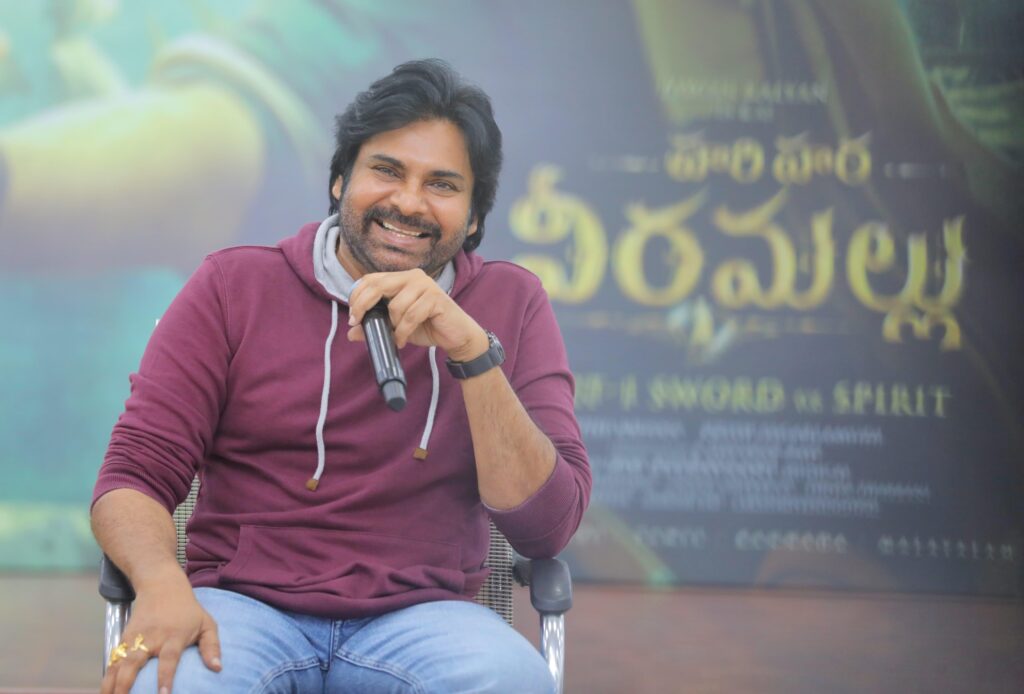
Deputy Chief Minister & actor Pawan Kalyan interacted with the media on the occasion of Harihar Veera Mallu‘s release and addressed various questions about the film and his journey.
Clarifying Misconceptions
Pawan Kalyan stated that the character of Harihar Veera Mallu is entirely fictional. Though comparisons are being made with historical figures like Sarvai Papanna, the story primarily deals with how the precious Kohinoor diamond reached the Mughal empire. More importantly, it depicts the oppression Hindus faced in the form of unjust taxes and showcases the cruelty of Emperor Aurangzeb, who even murdered his own brother.
About the Film’s Essence
He said, “Harihar Veera Mallu is a tale of a warrior who fought not just enemies, but the oppressive systems that plagued Dharma. It’s about rising against injustice, about sacrifice for one’s people and beliefs.”
Highlights from the Media Q&A with Pawan Kalyan:
Q: Is this a film centered on Sanatana Dharma?
A: Yes. It reflects the brutality of rulers like Aurangzeb, who killed his own brother. It’s about a warrior who risked everything to protect Dharma when Hindus were forced to pay a tax to live their faith.
Q: As Deputy CM, how do you balance politics and films?
A: Politics is my top priority. But acting gave me livelihood and recognition. I owe a lot to cinema.
Q: Why are you personally promoting this film so much?
A: The film faced multiple challenges – natural, human, political. The producers stood strong, and I felt it was my responsibility to stand by them and promote it wholeheartedly.
Q: Did you face political hurdles during the shoot?
A: Yes, several. I was confined to a hotel in Vizag, and my ticket prices were slashed deliberately. Past governments attempted to damage my films and those who worked with me.
Q: How do you feel comparing the film’s beginning to now?
A: It’s been a struggle from day one. But filmmaking itself is a battle. Overcoming that has been rewarding.
Q: Ticket rates have increased now. What’s your view?
A: It’s not just for my film. All movies got revisions. The government considers the producer’s efforts and gives approvals accordingly.
Q: Will you screen this film for your fellow MLAs, MPs, and ministers?
A: I hadn’t thought of that, but it’s a good suggestion. I’ll definitely arrange a special screening for them.
Q: Johnny was a big failure. How does it compare to your experience now?
A: Johnny taught me a lot. When it failed, I personally called and settled with buyers and financiers. That phase gave me strength in my political journey. It made me resilient.
Q: Is there a shortage of theaters for this release? What about Part 2?
A: No shortage of screens. And yes, Part 2 has already completed 20% of its shoot.
Q: Will you continue acting while being in politics?
A: That’s in God’s hands. Only time will tell what’s ahead.
Q: What’s needed for the film industry to grow in Andhra like it did in Hyderabad?
A: We need better facilities, infrastructure, and especially more film schools. That will foster more productions and create broader opportunities.
Harihar Veera Mallu is more than a historical fantasy; it’s a symbolic fight for justice and values. Pawan Kalyan’s passion, both in cinema and politics, is deeply evident in his commitment to telling such stories despite immense challenges.
